roofers
How Much Does Roof Replacement Cost in New Hampshire? 2026 Asphalt and Metal Pricing by Region
New Hampshire roof replacement costs in 2026: asphalt and standing seam metal pricing, ice dam prevention, cape and farmhouse quirks, and contractor vetting.
In This Article
- Asphalt and Metal, and When Each One Wins
- What Drives the Number Beyond Roof Size
- Snow, Ice Dams, and Why Ventilation Is Part of the Job
- Capes, Farmhouses, and Attached Barns
- Permits, Contractors, and the Sales Tax Difference
- Timing the Work and What Belongs in the Contract
- Common Questions About New Hampshire Roof Replacement
How Much Does Roof Replacement Cost in New Hampshire? 2026 Asphalt and Metal Pricing by Region
A full asphalt shingle roof replacement in New Hampshire runs $10,000 to $23,000 in 2026 for an average 1,800 square foot roof surface. Standing seam metal, which a growing share of homeowners here choose, costs $23,000 to $52,000 on the same house.
Roofers quote by the square, and one square covers 100 square feet of roof. Architectural asphalt installed with tear-off, new underlayment, ice barrier, drip edge, and flashing lands at $560 to $1,050 per square across most of the state. Crews working the Seacoast and the Lakes Region price at the higher end, while Coos and northern Grafton County jobs often come in lower on labor and higher on travel.
Snow is the reason New Hampshire roofing differs from roofing almost anywhere south of here. Design snow loads in parts of the state run several times what a Mid-Atlantic roof carries, ice dams form nearly every winter, and material choices that work fine in Virginia fail early in Franconia. The roof here is a structural system, not a surface.
Asphalt and Metal, and When Each One Wins
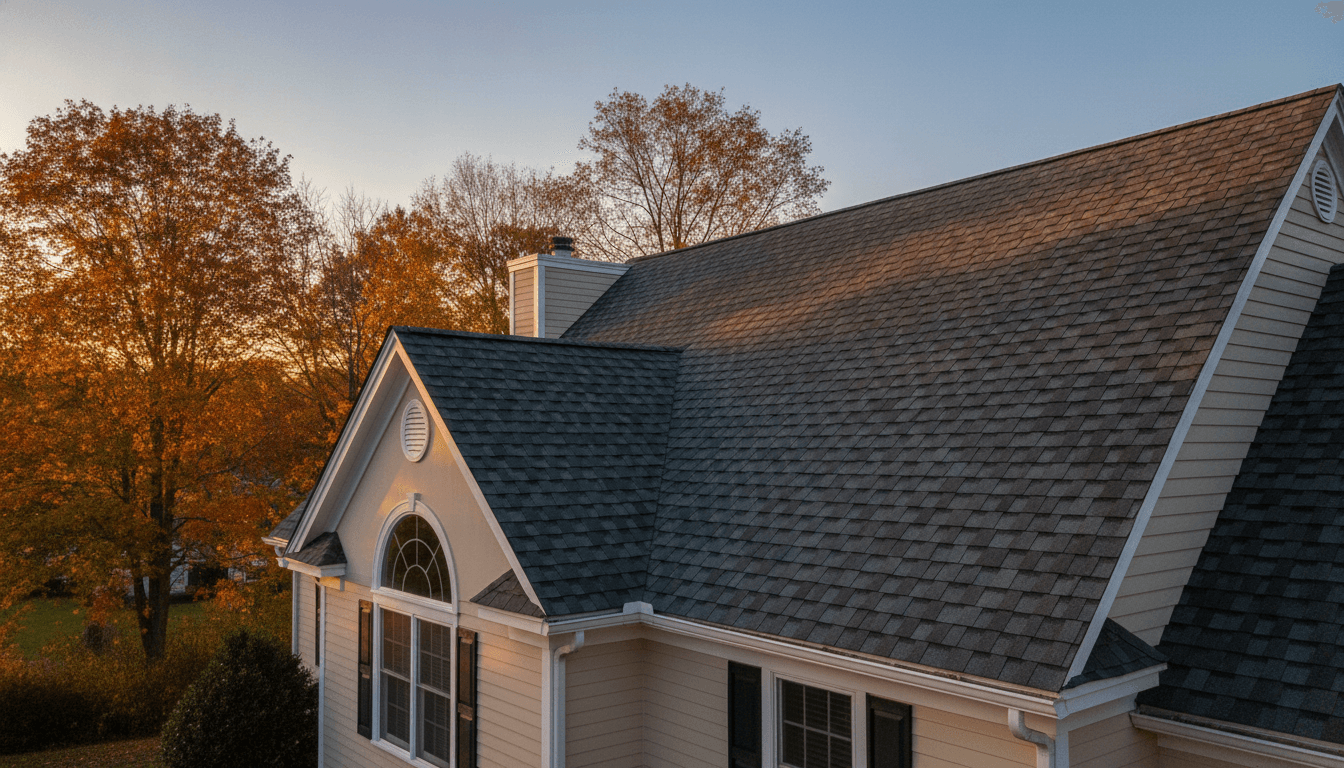
Architectural asphalt is still the volume choice, and a quality lifetime-rated shingle installed properly gives 22 to 30 years in this climate. Cost lands at $10,000 to $23,000 on a typical home, and the material is easy to repair, easy to match, and easy to find a crew for.
Metal has been gaining ground for a specific reason: it sheds snow. A standing seam roof with a smooth painted finish lets accumulation slide rather than sit, which reduces both the load on the framing and the ice dam risk at the eaves. It also lasts 45 to 70 years, which changes the math for anyone staying in the house.
The cost gap is real. Standing seam with concealed fasteners runs $23,000 to $52,000 installed, while exposed-fastener ribbed panel, the material you see on barns and camps, costs $13,000 to $26,000 and needs fastener maintenance every decade or so. Both beat asphalt in the mountains.
Snow guards matter once you go metal. A roof that dumps its entire snow load at once onto a walkway, a deck, or a parked car creates a hazard, so guards or fences at the eaves add $800 to $3,000 depending on roof length. Skip them and you will install them later.
Slate and Cedar on Older Homes
Slate shows up on 19th century homes in Portsmouth, Concord, and the mill cities, and a full slate replacement runs $40,000 to $100,000. Repair and reset work is far more common at $2,500 to $12,000, replacing broken tiles and rebuilding failed flashing.
Cedar shakes cost $22,000 to $45,000 and need more upkeep in a climate with this much moisture. Shaded north-facing slopes grow moss and hold damp, so cedar performs best on homes with real sun exposure and good airflow.
What Drives the Number Beyond Roof Size
Pitch is the first multiplier. Steep New England rooflines above an 8/12 need staging, roof jacks, and slower movement, and that adds 20 to 40 percent to labor. Many older New Hampshire homes were framed steep on purpose so snow would leave on its own.
Tear-off and disposal add $1.15 to $2.40 per square foot, and a roof already carrying two layers has to come off to bare deck. Dumpster placement is usually simple here since most properties have driveways, though rural jobs occasionally need a trailer instead.
Decking repair is the line item that converts a firm bid into a range. Older homes framed with board sheathing rather than plywood often need partial replacement, and installed plywood runs $70 to $135 per sheet. Get that number written into the contract before the crew starts, since nobody knows what is under the shingles until they come off.
Complexity finishes the calculation. Dormers, valleys, chimneys, skylights, and roof-to-wall transitions each need their own flashing detail, and flashing is where nearly every leak in this state begins. A simple gable costs meaningfully less than a cut-up roof of the same area.
Snow, Ice Dams, and Why Ventilation Is Part of the Job
Ice dams form when heat escaping the living space melts snow high on the roof, that water runs to the cold overhang, and it refreezes into a ridge that backs water up under the shingles. New Hampshire produces this pattern every winter, and it is the source of most interior water stains homeowners blame on the roof itself.
Ice and water barrier membrane at the eaves is the physical defense, and local practice runs it well past code minimum, often three to six feet up from the roof edge and through every valley. That upgrade adds $400 to $1,400 to a job and is the cheapest insurance on the estimate.
Air sealing and insulation are the actual cure. If the attic stays cold, the snow does not melt, and the dam never forms, which is why the smart version of a roof project includes soffit and ridge ventilation plus attic insulation work at $1,500 to $5,000. Homes in the Lakes Region and the White Mountains benefit most.
Raking snow off the lower few feet of roof helps in a heavy winter, and it is a stopgap rather than a solution. A roof rake costs $50 and a ceiling repair costs $2,000, so the tool earns its keep.
Capes, Farmhouses, and Attached Barns
The classic New Hampshire cape has low eaves and living space tucked under the slope, which leaves almost no attic to ventilate. Those roofs run warm, dam readily, and often need a vented over-roof assembly or closed-cell foam at the rafters, adding $3,000 to $9,000 to the project.
Connected farmsteads present a different problem. Houses joined to a shed and then to a barn create long runs of roof valley where two structures meet, and those valleys collect snow that never sees sun. Copper or heavy-gauge metal valleys cost more up front and outlast anything else there.
Older ells and additions frequently sit at a different pitch and height than the main house. Every change in plane is a flashing detail, and a bid that treats a farmhouse as one simple roof is a bid that has not been on the property.
Chimneys on older homes need attention during the roof job. Failing masonry above the roofline should be repointed before the new flashing goes in, and that mason work runs $900 to $4,000. Doing it after the roof is finished means cutting into new work.
Permits, Contractors, and the Sales Tax Difference
New Hampshire has no state licensing requirement for roofing contractors, so verification falls entirely on you. Ask for the certificate of general liability insurance and the workers' compensation certificate, and call the agent listed to confirm both are current. A crew member injured on your roof without comp coverage becomes your exposure.
Building permits are handled town by town rather than by the state. Most municipalities require one for a full replacement, some do not for a simple reroof, and the contractor should know your town's rule and pull the permit rather than asking you to.
New Hampshire charges no sales tax, which quietly saves several thousand dollars on a metal roof compared with the same job across the border. Materials on a $35,000 standing seam project would carry meaningful tax in Massachusetts or Maine, and here they do not.
Compare three written bids that specify the same shingle or panel line, the same ice barrier coverage, the same flashing metal, and the same per-sheet decking price. Sending identical scope to three roofing contractors working in your county is how you tell efficiency from omission, and our New Hampshire home service cost guides apply the same method to other trades.
Timing the Work and What Belongs in the Contract
The installation window here runs roughly late April through early November. Asphalt shingles need warmth for the sealant strips to bond, and cold-weather installs require hand-sealing every tab, which costs more and not every crew will do it. Metal can be installed later in the season than asphalt.
Good crews book out from May onward, and the busiest stretch is after the first hard winter, when everyone with an ice dam calls at once. Scheduling in late summer for a fall install usually gets a better price and a rested crew.
The contract should name the manufacturer and product line, the underlayment type, the ice barrier coverage in feet, the flashing material, the per-sheet decking rate, the payment schedule, and the workmanship warranty length. A one-page proposal with a lump sum and no specifications is not a contract you can enforce.
Common Questions About New Hampshire Roof Replacement
How long does an asphalt roof last in New Hampshire?
Expect 22 to 30 years from a quality architectural shingle, shorter on a shaded north slope that holds moss and ice. Roofs on Seacoast homes take more wind exposure and often reach the low end of that range.
Is a metal roof worth the extra cost here?
For homeowners staying long term in the Lakes Region, the mountains, or anywhere with heavy accumulation, generally yes. The snow-shedding behavior and the 45 to 70 year lifespan offset the higher install price, though the payback period runs past a decade.
Does homeowners insurance cover ice dam damage?
Policies typically cover the resulting interior water damage while excluding the roof repair itself, since dams are considered a maintenance condition rather than a sudden event. Photograph the icicles, the interior stains, and the dates.
Can I reroof over my existing shingles?
It is sometimes allowed by local code, and it hides rotten decking while shortening the new roof's life. On any New Hampshire home with a leak history or a soft spot underfoot, tear-off is the honest choice.
What does a roof repair cost instead of full replacement?
Flashing work, a valley rebuild, or a small shingle area runs $450 to $2,800. Once a roof passes 20 years with several active leaks, that money tends to get spent twice inside three winters.