pest-control
How Much Does Pest Control Cost in New Hampshire? 2026 Prices for Rodents, Ticks, Carpenter Ants, and Bat Work
How much does pest control cost in New Hampshire? 2026 prices for mice and exclusion, bat removal, carpenter ants, tick programs, and licensing checks.
In This Article
How Much Does Pest Control Cost in New Hampshire? 2026 Prices for Rodents, Ticks, Carpenter Ants, and Bat Work
Most New Hampshire households spend $350 to $650 a year on a recurring pest control plan, usually structured as three visits with an initial treatment of $150 to $325 and follow-ups at $85 to $135. A one-time treatment for a single problem runs $175 to $400. Wildlife work, tick programs, and wood-boring insect treatment are priced separately and can double the annual figure.
Geography does more to your quote here than in almost any other state. A company based in Nashua can service Hudson, Merrimack, and Amherst on the same tank of gas, so the rate stays competitive. That same company quoting a house outside Conway or up Route 3 in Coos County is pricing 90 minutes of windshield time into every visit, and it shows.
The other constant is the housing itself. New Hampshire has a deep supply of homes built before 1940, many with fieldstone foundations, unfinished cellars, balloon framing, and additions that were once porches. Every one of those features gives a mouse a route in, and sealing them is the part of the job that separates a real fix from a bait box refill.
What Regional Differences Do to Your Quote
Southern tier pricing along the Massachusetts border tends to run $10 to $25 per visit below the state average because of route density. Manchester, Nashua, Salem, Derry, and the Seacoast towns have enough companies competing that homeowners can get three quotes in a week. Annual plans in that corridor commonly land at $350 to $500.
Head north or west and the same service costs more. Lakes Region, Upper Valley, and North Country addresses often carry a trip charge of $25 to $75 per visit, or a company simply quotes an annual plan of $500 to $750 to absorb the mileage. Some smaller operators limit their service radius to 30 miles and decline anything beyond it.
Long private driveways create a scheduling problem more than a pricing one. From December through March, a company will not send a truck up an unplowed quarter mile drive, and winter rodent work in rural towns frequently gets pushed until the driveway is clear. Homeowners who plan on winter interior service should say so when they sign.
Rodents and Wildlife in Older Homes
Rodent pressure in New Hampshire is a fall and winter story. The first hard frost in October pushes deer mice and house mice toward warm foundations, and the calls spike within a week of it. A standard mouse program with interior traps, exterior bait stations, and two follow-up visits costs $300 to $600.
Baiting alone rarely holds in a 1890s farmhouse. The population drops for a season and rebuilds the following fall, because the sill gaps, the granite foundation joints, and the space where the pipe enters under the kitchen are all still open. This is why exclusion work is quoted as its own project rather than folded into the plan.
Mouse Exclusion and Sealing Work
Sealing a New Hampshire cellar properly runs $600 to $2,800, and the range reflects how much stonework and how many utility penetrations are involved. Technicians pack copper mesh and sealant into sill gaps, screen crawl space vents with hardware cloth, install bulkhead sweeps, and point up loose mortar in a fieldstone wall. A poured concrete foundation from the 1990s might need $400 of work while a farmhouse cellar needs ten times that.
Get the scope in writing with a photo log. Companies that stand behind exclusion typically offer one to two years of free rodent callbacks, and that guarantee is the clearest signal the sealing was done rather than sprayed over.
Bats, Squirrels, and Attic Cleanup
Bat exclusion is a specialty job in New Hampshire and costs $600 to $3,000 depending on roof height, the number of entry points, and how much soffit and ridge work is needed. Timing is controlled by law rather than convenience. New Hampshire restricts bat exclusion during the maternity season, roughly late May through mid August, so pups are not sealed inside without the mother, and reputable companies will refuse to work during that window.
Gray squirrels in an attic run $400 to $1,200 for trapping plus one-way door installation and repair of the entry hole. Guano or nesting cleanup with insulation removal and sanitizing adds $1,000 to $4,000, and homeowners insurance sometimes covers part of it when the damage is sudden rather than long-running.
Carpenter Ants, Beetles, and Wood-Boring Insects
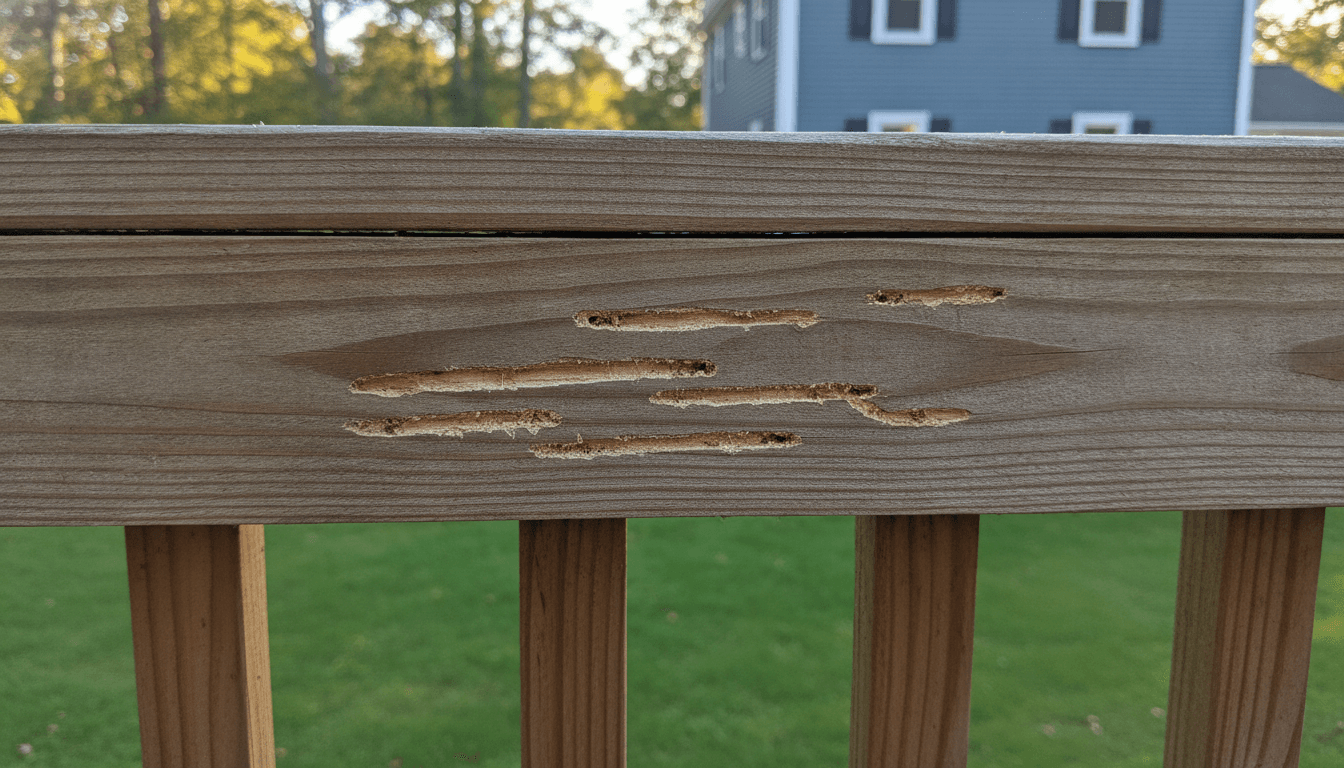
Carpenter ants are the number one structural insect in this state, and treatment costs $300 to $650 for a typical home. They nest in wet wood, so the trail almost always leads back to an ice dam leak, a failed gutter, a rotted deck ledger, or the wood next to a chimney flashing that has been weeping for years. Fixing that moisture source is a carpentry expense that comes on top of the treatment.
The colony structure explains the multi-visit protocol. A mature colony usually keeps its parent nest in a stump or a standing dead tree at the edge of the yard and runs satellite nests into the house, so effective work covers the perimeter, the yard trees, and injection into wall voids. Plan on two or three appointments over about six weeks.
Powderpost beetles turn up in old barns, exposed beams, and hardwood floors in antique homes and are frequently misidentified. Borate surface treatment runs $500 to $1,500 for a targeted area, and fumigation of a whole structure is rare and expensive at $3,000 and up. A wood destroying insect report for a real estate closing costs $100 to $200 and covers ants, beetles, and termites together.
Subterranean termites exist in New Hampshire, concentrated in the southern and Seacoast towns, though they are far less common than in states to the south. A liquid barrier or bait system costs $1,100 to $2,800 with annual monitoring at $250 to $450. Anyone quoting termite treatment in the North Country without showing you mud tubes or damaged wood should be asked to prove the diagnosis.
Ticks and Mosquitoes on Wooded Lots
Tick and mosquito barrier treatment costs $80 to $160 per application depending on lot size, and a full season of six to seven treatments from April through October runs $500 to $1,000. Deer ticks are established statewide and Lyme disease is a recurring public health concern in New Hampshire, with the highest exposure from May into July when nymphs are active and small enough to miss.
Yard structure decides how much benefit you get. Ticks live in the leaf litter and brush at the woods edge, not in mowed turf, so the treatment concentrates on that transition zone and the stone walls that run through so many New Hampshire properties. A house sitting on three wooded acres will never reach the same reduction as a half acre with a clean perimeter.
Tick tube placements are the lower cost alternative at $200 to $450 a year, applied twice a season. They treat the mice that host the immature ticks, and results accumulate over multiple seasons rather than showing up in the first month.
Mosquito service on a lot near a wetland, beaver pond, or slow stream is worth less than the sales pitch implies. Barrier sprays knock down the adults resting on your shrubs and do nothing about the breeding water 300 feet into the conservation land next door.
Seasonal Camps, Lake Houses, and Homes That Sit Empty
Winterized camps around Winnipesaukee, Squam, Newfound, and the smaller ponds have a pest problem that year-round homes do not. A building closed from October to May with no heat and no traffic becomes prime overwintering habitat, and owners open the door in spring to mouse damage, cluster flies on every window sill, and sometimes a red squirrel that has been in the insulation since November.
Cluster flies and ladybugs are the classic seasonal complaint, and treatment is preventive rather than reactive. An exterior application to south and west facing walls in late August or early September costs $175 to $350 and stops most of the fall entry. Once they are inside the walls, vacuuming is the only practical answer until spring.
Closing service packages run $250 to $500 and typically include a fall exterior treatment, interior bait placement, and a spring opening inspection. For a camp you visit twice a year, that arrangement costs less than one emergency call plus the mattress you end up throwing out.
Licensing, Pesticide Rules, and How to Check a Company
New Hampshire regulates pesticide use through the Division of Pesticide Control at the Department of Agriculture, Markets and Food, and anyone applying pesticides commercially must hold a valid applicator license in the correct category. Companies must also be permitted to operate, and the license categories separate general household pest work from wood destroying insect work and from turf and ornamental application. Ask for the license number and the category before you sign anything.
Wildlife work follows a different rulebook. Bat, squirrel, raccoon, and skunk removal falls under New Hampshire Fish and Game rules, and operators handling those animals must hold the appropriate state authorization. A company that offers to trap and relocate a raccoon without mentioning state rules is one to pass on.
Insurance and warranty language are the practical checks. Get a general liability certificate, and get the agreement in writing with the covered pests, the number of visits, the retreatment policy, the guarantee period, and the year-two renewal price all listed separately. Introductory rates that climb sharply at renewal are the most common source of billing disputes here.
Line up two or three quotes on the same defined scope before choosing. Reviewing licensed pest control companies in your area side by side makes an inflated bid obvious, and our guides to New Hampshire home service costs walk through how seasonal demand affects both price and wait time.
Frequently Asked Questions
How much does mouse removal cost in New Hampshire?
A standard trapping and baiting program runs $300 to $600 including two follow-up visits, and sealing the entry points on an older foundation adds $600 to $2,800. Homes with fieldstone cellars or attached barns sit at the high end because there is simply more surface to close off.
How much does bat removal cost in New Hampshire?
Exclusion runs $600 to $3,000 based on roof height and the number of gaps that need sealing, with attic cleanup adding $1,000 to $4,000 when guano has accumulated. Work is restricted during the summer maternity period, so most exclusions get scheduled for late August through October or in early spring.
Is a year-round pest control plan necessary in New Hampshire?
Three visits a year covers most homes, since insect activity collapses between December and March. Properties with wooded borders, wells, outbuildings, or a history of rodent entry get better results from four visits at $400 to $700 a year.
When should I start tick treatment in New Hampshire?
Mid to late April, before nymph activity ramps up in May, and continuing through October at three to four week intervals. Starting in June after the first bite means you have already missed the highest risk stretch of the season.