plumbers
How Much Does a Plumber Cost in New Hampshire? 2026 Rates for Wells, Frozen Pipes, and Camp Season
How much does a plumber cost in New Hampshire? 2026 hourly rates plus well pump, septic, water heater, frozen pipe, and camp winterizing prices.
In This Article
- What Plumbers Charge Around the State
- Well Pumps, Pressure Tanks, and Bedrock
- Where the Plumber Stops and the Septic Company Starts
- Water Heaters, Indirect Tanks, and the Heating Fuel Question
- Frozen Pipes, Camps, and the Winterizing Calendar
- Licensing, Permits, and How to Check a Plumber
- Frequently Asked Questions
How Much Does a Plumber Cost in New Hampshire? 2026 Rates for Wells, Frozen Pipes, and Camp Season
Most New Hampshire plumbing shops bill $95 to $165 an hour in 2026, with a service call or diagnostic fee of $75 to $150 on top. Flat rate pricing has taken over the common repairs, so a toilet rebuild is quoted as a number rather than a clock.
What makes plumbing here different from plumbing in a city is scope. Roughly four in ten homes in the state draw from a private well and send waste to a septic system, which means the plumber's territory runs from the bedrock under the yard to the leach field out back. Nobody is calling a water department when the pressure drops.
Heat complicates the picture further. Oil and propane still warm a large share of the state's homes, and that puts indirect water heaters, boiler loops, and gas fitting inside the same trade. A plumber in Nashua and a plumber in Colebrook are pricing genuinely different work.
What Plumbers Charge Around the State
Geography sets the floor. Shops in Nashua, Manchester, Salem, and the Seacoast run at the top of the hourly range because labor competes with the Boston market and drive times between calls are short. North Country and Lakes Region companies often quote a lower hourly rate and then add a mileage or travel charge that erases the difference.
Emergency work follows a predictable pattern. After hours calls carry $200 to $400 for the first hour, and a January burst pipe at eleven at night can hit $500 before anything gets repaired. Weekend rates during a cold snap run higher still because every truck in the county is already committed.
Common repairs land in tight ranges. Clearing a kitchen drain runs $200 to $450, replacing a standard toilet costs $350 to $700 installed, and a new kitchen faucet with shutoff valves usually falls between $300 and $650. Camera inspection of a main line adds $300 to $600.
Larger repairs spread out more. Replacing a run of failed copper in a crawl space might be $600, while repiping a small older home in Berlin or Claremont with PEX commonly runs $6,000 to $14,000. Access under the floor decides most of that spread.
Flat Rate Versus Hourly, and When Each One Wins
Flat rate protects you on jobs that go sideways. If the shutoff valve snaps off in the technician's hand, a flat quote absorbs it and an hourly bill does not. That is worth paying a little more for on anything involving fittings older than you are.
Hourly still wins on diagnostics and on short, clean work. A plumber who spends twenty minutes finding a bad pressure switch and swapping it costs less on the clock than out of the flat rate book. Ask which model the company uses before the truck rolls.
Well Pumps, Pressure Tanks, and Bedrock
Most New Hampshire wells are drilled into bedrock, often 300 to 600 feet deep, with a submersible pump hanging near the bottom. Replacing that pump typically runs $1,500 to $3,500 on a shallower well and $2,500 to $5,000 once depth, wire, and pipe add up. The depth of your well is the single biggest number in that quote.
Pressure tanks fail more often than pumps and cost much less to fix. A waterlogged tank makes the pump short cycle, which is the fastest way to destroy a pump that had years left. Replacement runs $600 to $1,400 including the switch and gauge.
Symptoms tell you which one you are dealing with. Pressure that surges and drops every thirty seconds usually points at the tank, while water that sputters and runs dirty after a long shower points at the pump or the well recovering slowly. Getting that call right saves a few thousand dollars.
Dry wells are a seasonal reality in parts of the state. Late summer drought pulls static levels down in shallower wells, and homeowners in the Monadnock region and the Lakes Region see it most. Hydrofracturing an existing well to improve yield runs $2,500 to $5,000, well below the cost of drilling new.
Treating Iron, Arsenic, and Radon in Well Water
Bedrock wells here carry minerals that municipal customers never think about. Naturally occurring arsenic shows up in wells across large sections of southern and central New Hampshire, and radon in water is common in the same granite. Neither one has a taste or a smell.
Treatment equipment is a plumbing purchase with real numbers attached. A water softener or iron filter installs at $1,800 to $4,000, an arsenic treatment system at $2,500 to $5,000, and radon in water aeration at $4,500 to $8,000. Testing first is $150 to $400 and tells you which of those you need.
Where the Plumber Stops and the Septic Company Starts
The dividing line usually sits at the foundation wall. Licensed plumbers handle everything inside the house plus the sewer line to the exterior, and septic contractors handle the tank, the distribution box, and the leach field. Plenty of companies do both, and plenty do not.
That split matters when the symptoms are ambiguous. Slow drains throughout the house, gurgling fixtures, and standing water in the yard usually mean the system is backing up rather than a single line clogging. Calling a plumber first costs you a service call before you get the right truck.
Routine septic pumping runs $400 to $700 and belongs on a three to five year schedule for most households. Skipping it is how solids reach the leach field, and a failed field is a $15,000 to $35,000 replacement in this state once design and permitting through the Department of Environmental Services are included. Nobody has ever regretted the pumping bill.
Older properties carry a specific risk. Homes built before the 1970s sometimes still have a cesspool rather than a modern tank and field, and those cannot be repaired once they fail. A real estate transaction is usually where that discovery happens.
Water Heaters, Indirect Tanks, and the Heating Fuel Question
A standard 50 gallon electric water heater installs at $1,600 to $2,800, and propane or oil fired units run $2,200 to $4,000. Tankless propane systems land at $4,000 to $7,000 once venting and gas line sizing are handled. Older houses often need a new vent path, which is where quotes diverge.
Indirect fired tanks are the New Hampshire specialty. They hold no burner of their own and instead pull heat from the boiler through a dedicated zone, which is efficient through the heating season and less so in July. Replacement runs $2,200 to $4,500 including the zone valve and circulator.
Gas work brings a second credential into the picture. New Hampshire licenses gas fitters separately from plumbers, so the person sizing your propane line for a tankless heater needs that specific license. Ask to see it rather than assuming the plumbing license covers it.
Boiler and heating loop work sits at the top of the price list. Replacing an oil boiler runs $8,000 to $14,000 installed, a propane boiler $7,000 to $13,000, and adding a heating zone with baseboard costs $1,500 to $3,500. Late summer is the cheapest time to buy any of it.
Frozen Pipes, Camps, and the Winterizing Calendar
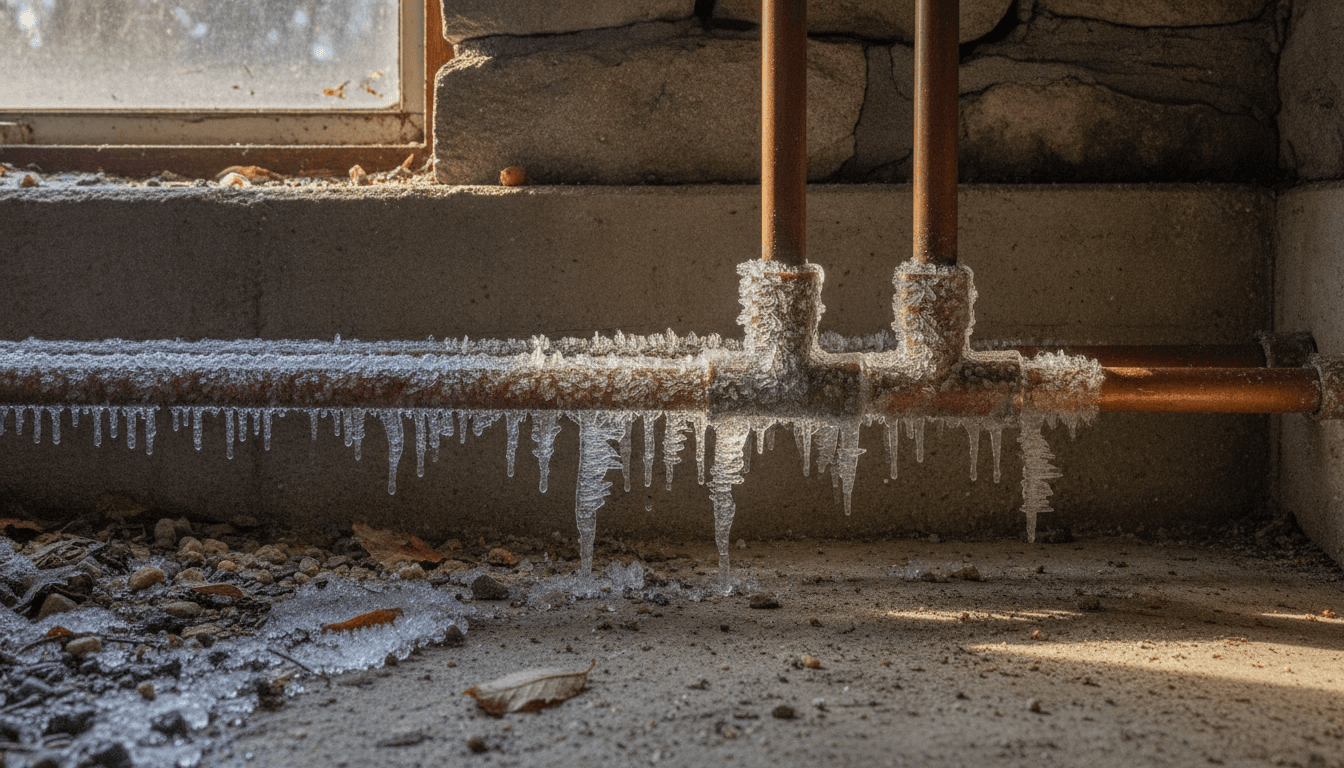
Frozen pipe calls spike during the first sustained subzero stretch, usually in January. Thawing and repairing a single frozen line runs $300 to $900, while a pipe that split and ran for hours turns into a $600 to $2,500 plumbing bill plus whatever the water damage costs. Crawl spaces and unheated garages account for most of them.
Prevention is cheap by comparison. Heat tape on vulnerable runs, foam insulation in a crawl space, and a low temperature alarm on a phone app together cost a few hundred dollars. Any house that sits empty for stretches during winter should have one.
Seasonal properties change the whole conversation. Lake camps around Winnipesaukee, Sunapee, and Newfound get drained every fall, and a professional winterization visit runs $150 to $400 depending on fixture count and whether the system has a shallow well pump. Spring reopening costs about the same.
Camps also fail in ways year round homes do not. A season of freeze and thaw finds every weak solder joint, so the reopening visit often turns into a repair visit. Owners who blow the lines with compressed air rather than relying on gravity have far fewer of those calls.
Licensing, Permits, and How to Check a Plumber
New Hampshire licenses plumbers through the Mechanical Licensing Board, with master, journeyman, and apprentice classifications. A master plumber license is required to contract directly with homeowners, and journeymen work under a master rather than independently. License status is searchable through the state's licensing office.
Insurance is the second verification and the one people skip. Ask for the certificate of general liability directly from the insurance agency, and confirm workers compensation coverage if a crew will be in the house. An uninsured worker injured on your property becomes your problem.
Permits depend on where you live. The state building code applies statewide, but enforcement is local, and some smaller towns have no full time inspector at all. Water heater swaps, repipes, and new fixture rough-ins generally require a permit and an inspection, so ask your plumber what your town wants before the work starts.
Three written quotes on identical scope is the only reliable way to compare. Describe the same job to three licensed plumbers serving your area and ask each to price the same parts, the same labor, and the same warranty term. Our home service cost guides for New Hampshire homeowners apply the same method to electrical, roofing, and heating work.
Frequently Asked Questions
What is the average hourly rate for a plumber in New Hampshire?
Most shops bill $95 to $165 an hour with a $75 to $150 service call fee, and Seacoast and southern tier companies sit at the upper end. After hours work jumps to $200 to $400 for the first hour, which is why a slow leak is worth shutting off and scheduling for morning.
How much does it cost to replace a well pump here?
Budget $1,500 to $3,500 for a typical submersible replacement and up to $5,000 on a deep bedrock well where wire and drop pipe add cost. If the pump is short cycling rather than failing outright, replacing a waterlogged pressure tank at $600 to $1,400 may be the real fix.
Do I need a permit for plumbing work in New Hampshire?
Most towns require one for water heater replacements, repiping, and new fixtures, though enforcement varies because inspection is handled locally. Your master plumber should file it, and getting the inspection signed off protects you when the house sells.
How much does it cost to winterize a lake camp?
A professional winterization typically runs $150 to $400 depending on the number of fixtures and whether the property has a shallow well pump to drain. Spring reopening costs about the same, and booking both before Columbus Day usually gets a better slot.
Are plumbers licensed by the state of New Hampshire?
Yes. The Mechanical Licensing Board issues master, journeyman, and apprentice plumbing licenses, and gas fitting carries its own separate license. Verify the number through the state licensing office before signing anything, since the trade card and the business are two different checks.